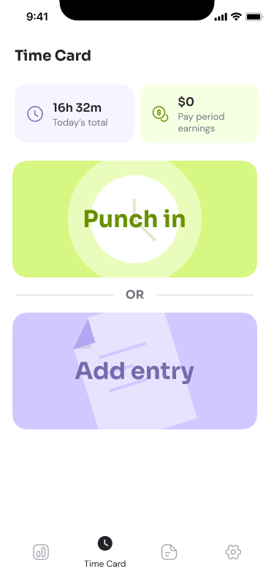
Here's how it's done:
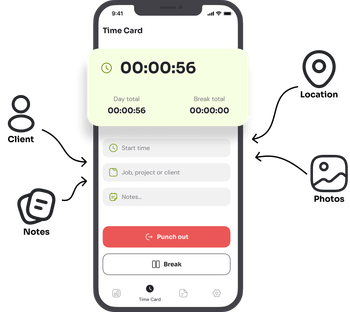
Clock in or simply add time cards on their own phone
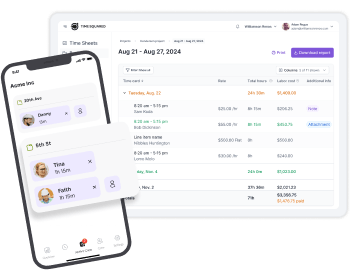
Tracked time and employee activity are synced in real time
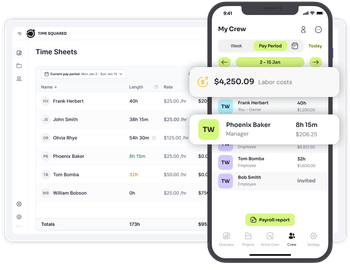
View costs by pay period, month or week against client, project or job
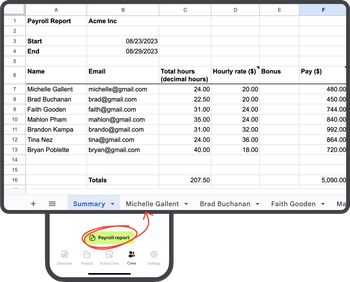
Create Excel report for payroll, billing or management
Turnout is the cornerstone. It involves the lateral rotation of the legs from the hip joint, causing the knees and feet to face away from each other (ideally 180 degrees).
: The text includes materials for planning lessons, making it highly actionable for teachers. Review Summary basic principles of classical ballet pdf
You don't need a barre to train the brain. Try this 5-minute floor workout to embody the principles: Turnout is the cornerstone
In conclusion, the principles of classical ballet—turnout, alignment, the use of weight, and epaulement—are more than just rules in a textbook. They are the result of centuries of refinement, a distillation of the most effective ways to utilize the human body for aesthetic ends. While digital resources like PDFs can chart the anatomical mechanics of these rules, the true essence of ballet lies in their execution. It is in the moment the dancer transforms the rigid laws of physics into poetry, proving that within the strictest boundaries lies the greatest potential for freedom. Review Summary You don't need a barre to train the brain
As a PDF, this document is a treasure. It strips away the glossy marketing of modern dance books and delivers pure, dense methodology. Agrippina Vaganova didn’t just write a book; she codified a system. This text explains why your arm moves from fifth to second position and how the knee must align over the toe in a plié.
Derived from the French word for "steadiness," aplomb refers to the ability to maintain stability while shifting weight.
: Emphasized as a rotation from the hips, not the knees, to create a stable base.
Entries sync automatically between employees and manager
Easily make reports with a few taps
Scale up or down without ballooning fees as you adjust to seasonal changes
One big button to clock in and one to add entry. That’s it!
Employees can use whatever device they want
Track required info and detailed history
See how much easier it is to stay organized with Time Squared
![[object Object]](https://umsousercontent.com/lib_syYmRjXldXEeMpBl/vb03w7jdudvkk2b0.png?w=68)